

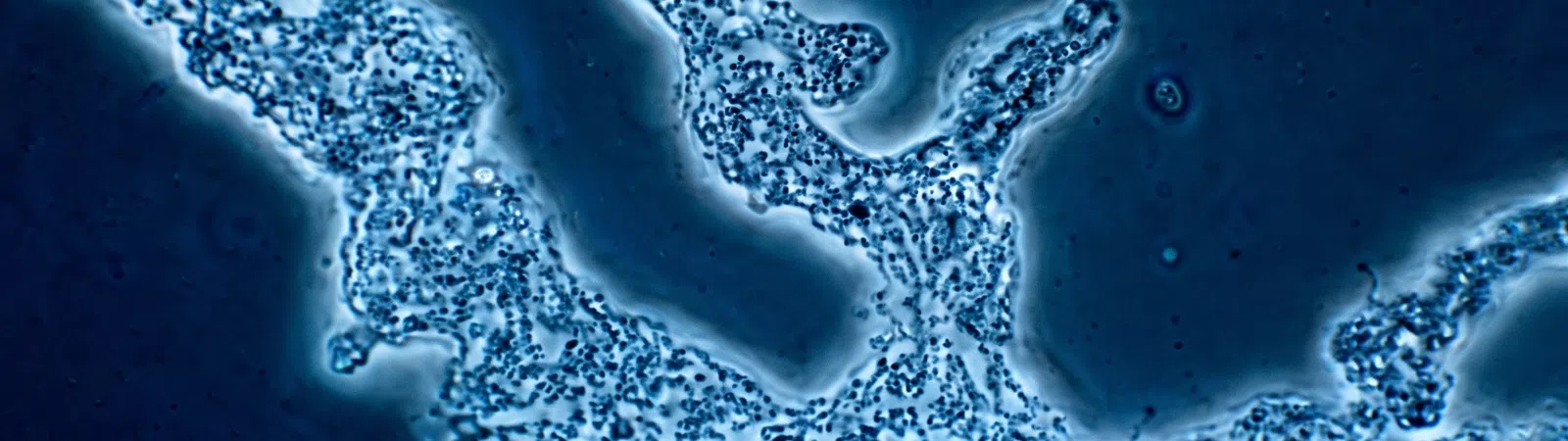
The living glue hiding in your drains
Quietly causing floods, mold, odors and failed systems
Stop Zoogloea before it starts
The easiest way to keep Zoogloea out of your AC is routine maintenance.
Our HVAC Maintenance Membership includes two complete maintenance visits a year with a full 21-point inspection, priority service, 15% off repairs and a 1-year warranty on AC repairs.
Add Drain Guard and we'll install HVAC pan strips backed by a 6-month unconditional drain line guarantee. If your drain line backs up within 6 months, clearing it is free, any time, day or night.
What you're looking at
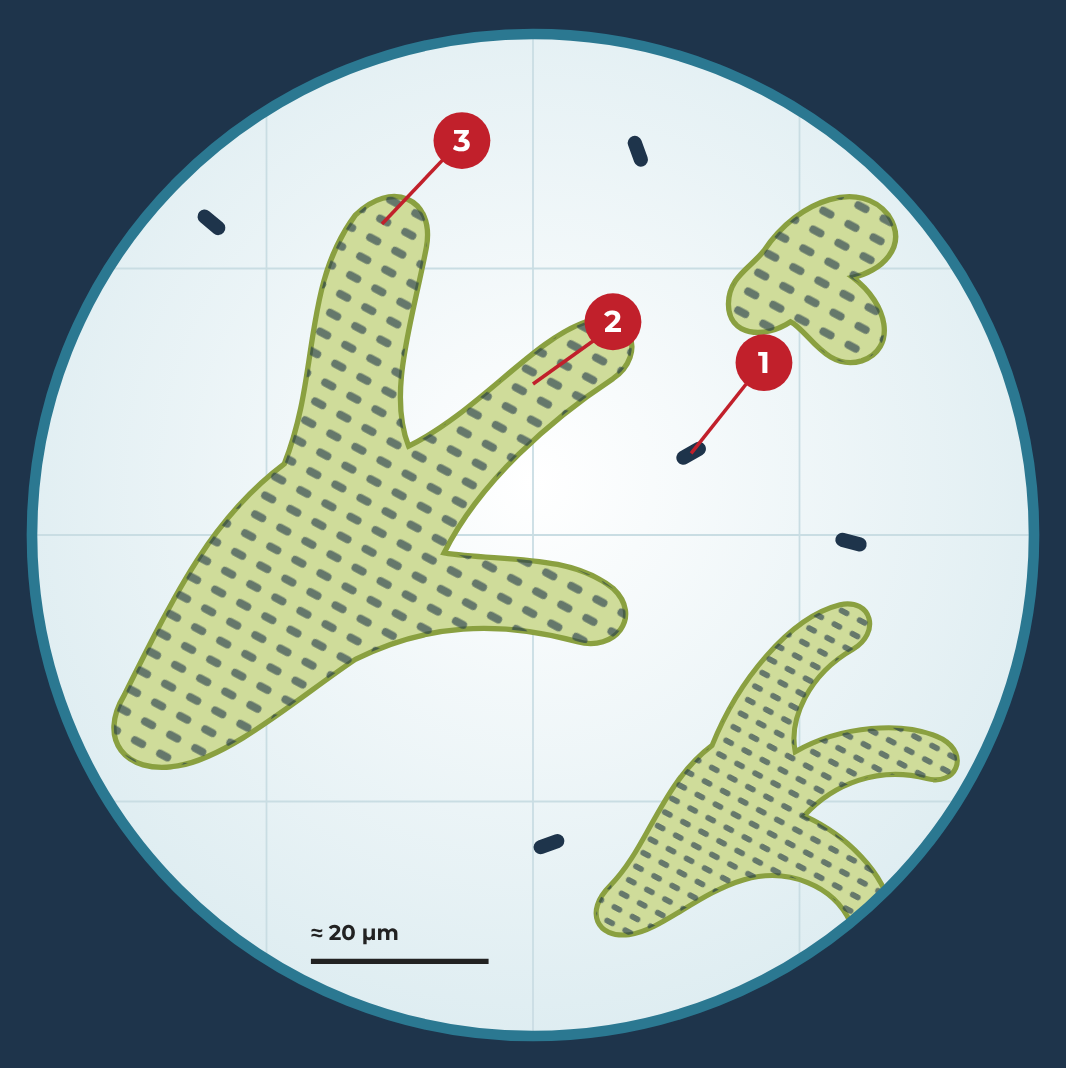
An illustrated view of a Zoogloea colony, the kind of slime found in AC drain pans and wastewater tanks.
1. Rod-shaped cells Individual Zoogloea bacteria. Each is a tiny rod that swims with a single flagellum and needs oxygen to grow.
2. EPS matrix ("slime") A gel of sugars and other polymers the cells secrete. It glues them together and holds water, which is what clogs drain lines.
3. Branching "fingers" The tree-like colony shape microbiologists use to recognize the genus.
Illustration, not a photograph. Scale bar ≈ 20 µm; not drawn to exact scale.
Where does Zoogloea Grow?
Zoogloea needs three things: water, oxygen and a steady supply of dissolved organic material. Several places provide all three.
Air-conditioner drain pans and condensate lines
This is where most homeowners and building managers run into it. An AC removes humidity as it cools, and that moisture drains through a small pipe. Dust, pet dander and other airborne particles mix with the condensate on the coil and collect into a sticky Zoogloea slime. In neglected systems it can spread onto the indoor evaporator coil itself.
Wastewater treatment plants
In activated sludge systems, Zoogloea is a normal and even necessary resident. Floc-forming bacteria like it are required to build the clumps that let solids settle out of treated water. Trouble begins when the population grows out of balance.
Cooling water and industrial loops
Industrial cooling systems also suffer from microbial slime. A U.S. patent on slime control describes tests using refinery wastewater whose slime was mainly Zoogloea, and notes that such deposits clog pipelines and reduce heat-exchange efficiency.

Brands We Recommend


